Logo

    Articles

    Contributions et remerciements

    Contributions and Acknowledgments

    Politique de confidentialité

    LinkedInRSSInstagram
    Parental leave policy
    📫

    Parental leave policy

    Catégorie
    2. Team
    Sous-catégorie
    2.2. Compensation & Training
    Stade
    Seed

    ⬅️ Back to the guide

    Written in collaboration with Shine, a professional bank account account for businesses and independent professionals.

    What is at stake?

    A parenting policy naturally formalizes parental leave, especially the second parent's leave. However, it can also be more comprehensive, addressing all aspects of parenthood (assisted reproductive technology, adoption, miscarriage, pregnancy announcements, schedule adjustments for young parents, etc.).

    The concept of parenthood as understood at Shine begins at the desire to become a parent and encompasses all stages and paths: assisted reproductive technology, pregnancy, adoption, birth, welcoming the child, balancing professional life with parenting duties, and so on.
    🔥
    How to establish a culture that abolishes taboos and values parenthood?

    Why is it important?

    Parenthood is a significant issue in the professional lives of employees, particularly women, who often perceive and experience it as a hindrance to their careers, according to an INSEE study. In the startup ecosystem, parenthood is a reality that must be addressed, given the average age of entrepreneurs and their teams.

    Implementing a parenting policy means:

    ➡️ Creating an environment of transparency conducive to a better understanding of the challenges related to parenthood in the professional setting

    ➡️ Promoting gender equality in the distribution of paid work and of childcare responsibilities between men and women;

    ➡️ Standing out for potential recruits;

    ➡️ Acting as a model that can inspire other stakeholders to evolve their practices related to parenthood.

    image
    In line with our values and commitments, we have developed a parenthood policy to ensure that:
    • we encompass parenthood in its broadest sense,
    • we safeguard the confidentiality of our employees,
    • parents, future or potential parents are treated equally and that their parenthood does not in any way hinder their professional advancement,
    • parents, future or potential parents are supported in balancing their professional and personal lives.

    Nicolas Reboud - CEO de Shine

    Three key steps to take

    1️⃣ Implement extended parental leave / Sign the ParentalAct

    The ParentalAct brings together companies that commit to provinding for 1 month’s fully-paid leave for the second parent.

    2️⃣ Draw inspiration from best practices already established in some startups and companies

    • 📣 Examples of measures implemented at Shine:
      • An annual gross salary increase of €2,500 per dependent person
      • An 8 weeks leave for the second-parent (without tenure or status conditions)
      • 100% salary continuation throughout the leave period (without tenure or status conditions)
      • Allowing the second parent to accompany their partner to all appointments related to assisted reproductive technology (ART) and/or pregnancy monitoring
      • 3 days of leave to tend to a sick child per year
      • 2 days of paid leave in the case of a miscarriage (SYNTEC provision)
      • For employees engaged in an adoption process: 5 paid absences to attend mandatory appointments related to the approval request
      • A "re-onboarding" program for returning to work after a long absence, flexible hours, and half-day of paid leave per week during the first month back following a period of leave.

    3️⃣ Communicate the policy internally and externally

    • Create a parenthood toolkit or guide that includes legal information and the startup's commitments related to parenthood.
    • Explain the parenthood policy during the hiring process.
    • Share commitments with other stakeholders in the ecosystem to co-build.
    ‣
    📣 Examples of measures implemented at Shine for internal communication
    • We began by creating our Parenthood Guide, available to all employees, which compiles all legal, conventional, and specific Shine-related measures concerning parenthood in one place.
    • We designated a Parenthood Contact Person whom employees can confidentially reach out to with their questions, enabling them to access their rights and benefits without necessarily informing the manager or HR of their personal situation.
    • We developed a version of the guide for managers, as they play a crucial role in the success of this policy. It includes advice, guidelines, and resources to help managers to support employees based on their individual situations.

    📚 Resources and further reading

    ‣

    ⚖️ Reminder of regulations regarding second-parent leave

    Second-parent leave is 28 days for a first child. The employer cannot oppose the taking of this leave.

    It is divided into several periods:

    • A mandatory 3-day paternity leave, to be taken immediately after childbirth.
    • A mandatory 4-day period, to be taken immediately following the paternity leave.
    • An optional 21-day period, to be taken before the child reaches 6 months, in one or two segments, at the employee's discretion.

    Second-parent leave extends to 35 days for two children or more.

    La durée du congé paternité passe de 14 à 28 jours

    Cette nouvelle conquête sociale et cette avancée pour l’égalité entre les femmes et les hommes entre en vigueur ce 1er juillet 2021.

    www.gouvernement.fr

    La durée du congé paternité passe de 14 à 28 jours
    ‣

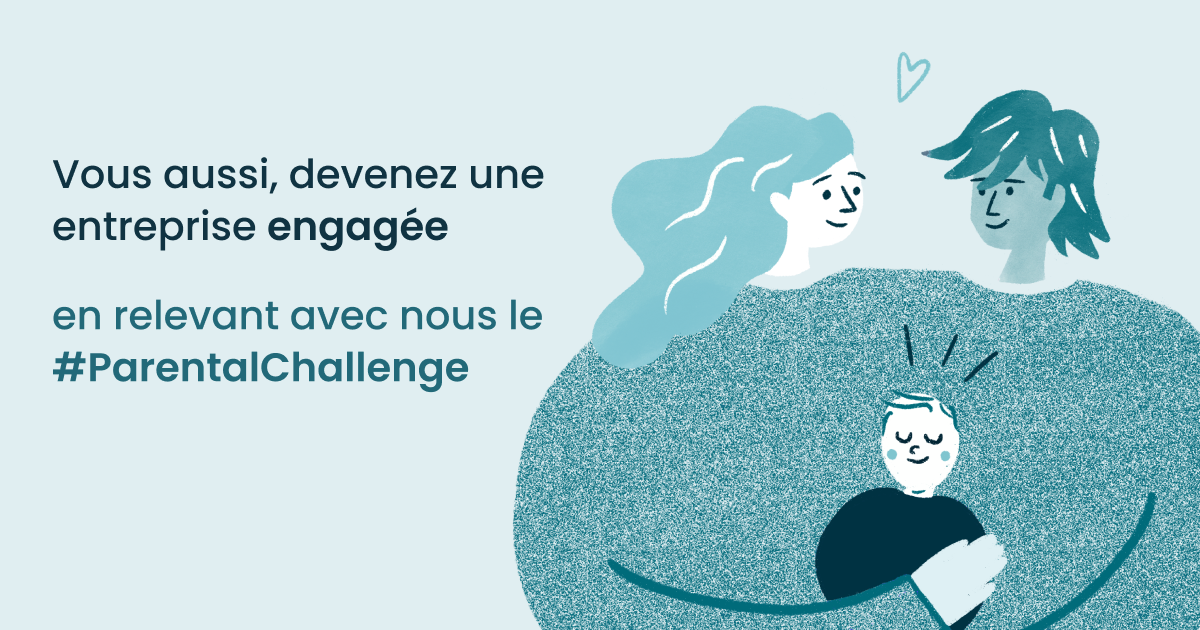
    📖 The Parental Challenge Guide and Charter

    A comprehensive guide on the challenges of implementing a parental policy in the workplace and the concrete actions that can be implemented.

    Relevez le #ParentalChallenge

    Un guide concret et une charte d'engagement pour que chacune et chacun puisse s'épanouir dans son entreprise tout en étant parent

    parentalchallenge.com

    Relevez le #ParentalChallenge
    ‣

    📖 Paternity Leave: These startups that have taken the lead (Maddyness, 2021)

    Congé paternité : ces startups qui ont pris les devants

    Le rêve de Céline Lazorthes, fondatrice et dirigeante de Leetchi, Thibault Lanthier, fondateur de Mon Docteur et Isabelle Rabier, fondatrice de Jolimoi, prend forme. Leur lobby à payer. Le gouvernement s'est inspiré de leur initiative Parental Act - une charte proposant un mois de congé entièrement rémunéré au deuxième parent à la naissance d'un enfant - pour réformer le congé paternité.

    www.maddyness.com

    Congé paternité : ces startups qui ont pris les devants
    ‣

    📊 Study of Paternity and Parental Leave (EDHEC, 2022)

    The survey "Paternity and Parental Leave: Perceptions and Expectations" was conducted by the Diversity & Inclusion Chair at EDHEC in 2022.

    Le congé de paternité et d'accueil de l'enfant

    L’enquête, réalisée par la chaire en 2022, tente de cerner pourquoi les individus font valoir ou non leur droit à ce congé. L’étude met en avant les raisons du recours ou du non-recours au congé de paternité mais également les attentes des femmes et des hommes relatives à l’amélioration de ce dispositif aussi bien à l’échelle de l’entreprise que de la société.

    www.edhec.edu

    Le congé de paternité et d'accueil de l'enfant

    Survey Summary:

    • The survey results show that the utilization of paternity leave is on the rise.
    • In this study, 94% of fathers who had a child after July 1st, 2021, took this leave, compared to only 70% of fathers before that date.

      However, only 6% of fathers adjusted their work hours or took parental leave following their paternity leave.

    • Additionally, the survey highlights 4 main reasons for not using paternity leave: lack of awareness about the policy; employment, including a perceived heavy workload; potential loss of income associated with this leave; and a traditional conception of the father's role that reinforces gender stereotypes.
    • On the contrary, 3 main factors influence the use of paternity leave: social norms, particularly how respondents believe their peers would approve or disapprove of taking this leave; a more or less traditional view of the father's role; and the perception of gender equality within the company.
    • Moreover, for nearly 90% of respondents, paternity leave is a policy that should be strengthened, possibly through mandatory leave, extended duration, or better compensation. Finally, the survey suggests potential changes for organizations, such as working on company culture or planning for the employee's absence.

    The survey results show that the use of paternity leave is on the rise.

    • In this study, 94% of fathers who had a child after 1 July 2021 took this leave, compared with only 70% of fathers before that date.
    • However, only 6% of fathers adjusted their work hours or took parental leave following their paternity leave.

    • Additionally, the survey highlights four main reasons for not using paternity leave: lack of awareness of the policy; employment, including perceived heavy workload; potential loss of income associated with taking the leave; and a traditional conception of the father's role that reinforces gender stereotypes.
    • Three main factors influence the use of paternity leave: social norms, particularly whether respondents believe their peers will approve or disapprove of them taking this leave; a more or less traditional view of the father's role; and the perception of gender equality within the company.
    • Nearly 90% of respondents believe that paternity leave policies should be strengthened, possibly through mandatory leave, extended duration, or better compensation. Finally, the survey suggests potential changes for organizations, such as working on company culture and planning for the employee's absence.
    ‣

    📚 Judith Aquien's book "Three Months in Silence”

    Book recommended by Shine: "This book sheds light on the taboos surrounding the first few months of pregnancy."

    ✍️ They contributed to the creation of this document

    Shine, a professional online bank account for businesses and independent individuals.

    image
    Le compte pro en ligne qui simplifie votre quotidien

    Le compte pro en ligne adopté par 100 000 entrepreneurs ✓ RIB français ✓ Mastercard Business ✓ Comptabilité simplifiée et bien plus

    www.shine.fr

    Le compte pro en ligne qui simplifie votre quotidien

    LinkedIn

    < Back to the guide

    image